

Ship Recycling’s Key Role in the Maritime Circular Economy
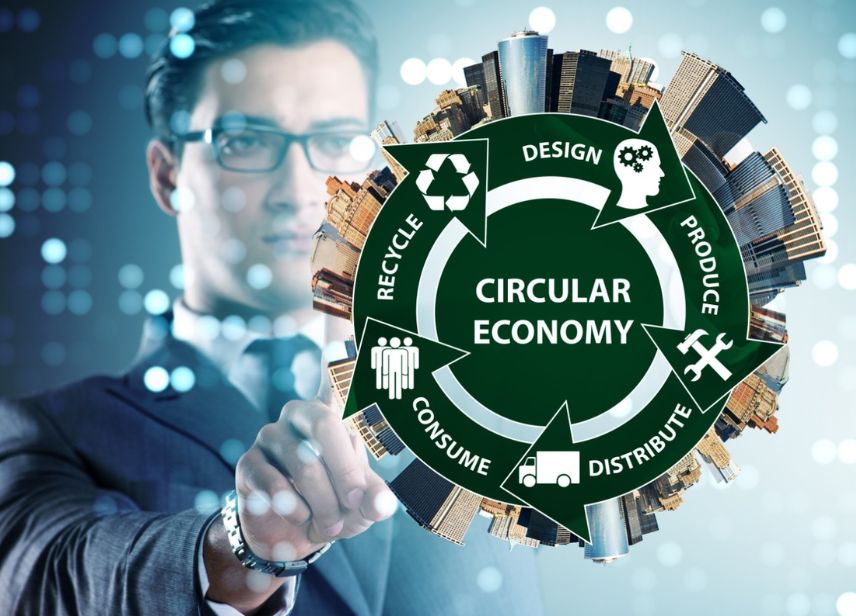
The maritime industry is under increasing pressure to align with the principles of the global circular economy—and ship recycling sits at the heart of this transformation.
While much of the industry’s focus has been on decarbonisation and alternative fuels, there is growing recognition that reducing resource consumption and improving lifecycle sustainability are equally critical. Ship recycling yards, particularly in South Asia, will play a pivotal role in enabling this transition.
The Push Toward a Circular Maritime Economy
Global regulatory and societal expectations are shifting rapidly:
- The United Nations has prioritised sustainable consumption and production as a key Sustainable Development Goal
- The European Union’s Circular Economy Action Plan, under the European Green Deal, promotes resource efficiency and waste reduction
- Industries such as automotive and aviation are already advancing circular practices
Shipping, however, is still catching up.
This new paradigm challenges traditional thinking and calls for a fundamental shift in how shipowners view their assets—not just as tradable commodities, but as part of a long-term resource lifecycle.
Rethinking Asset Value: A Lifecycle Approach
The transition to a maritime circular economy requires a “cradle-to-grave” lifecycle approach to vessel investments.
Shipowners must now consider:
- Scope 1 emissions (direct operational emissions)
- Scope 2 emissions (energy-related indirect emissions)
- Scope 3 emissions (value chain emissions, including ship recycling)
This broader accountability is reshaping decision-making.
Instead of focusing solely on resale value, shipowners are increasingly looking to:
- Extend vessel lifespans
- Maximise operational efficiency
- Reduce material waste over time
Maximising Lifecycle Value Through Design Innovation
Circularity will also influence how ships are built.
Future ship design is likely to prioritise:
- Modular construction for easier upgrades and repairs
- Standardised components for reuse and replacement
- Retrofitting flexibility to adapt to evolving regulations
This represents a shift away from bespoke shipbuilding toward more adaptable and sustainable designs.
The benefits are clear:
- Lower lifecycle costs
- Increased operational flexibility
- Improved risk management
- Enhanced long-term revenue potential
Data Transparency and Material Traceability
Achieving circularity depends heavily on data transparency.
Today, shipping companies already maintain an Inventory of Hazardous Materials (IHM) under:
- The Hong Kong Convention (HKC)
- The EU Ship Recycling Regulation (EUSRR)
Building on this, the industry can move toward:
- Tracking ship components throughout their lifecycle
- Recording material composition from construction to recycling
- Enabling efficient reuse and recycling at end-of-life
Such traceability would significantly enhance sustainability outcomes.
South Asia’s Critical Role in Global Recycling Capacity
South Asian shipbreaking yards—primarily in India, Bangladesh, and Pakistan—currently:
- Handle over 80% of global ship recycling tonnage
- Provide essential capacity for large-scale vessel dismantling
Their importance is set to grow even further.
With ship recycling demand expected to quadruple by 2033, these yards will be indispensable in managing future volumes.
Steel Recycling: A Major Environmental Opportunity
Steel is the backbone of ship recycling:
- It accounts for 75% to 85% of a vessel’s tonnage
- Recycled steel can be reused across industries such as construction and manufacturing
This creates a major sustainability benefit:
- Reduces reliance on energy-intensive primary steel production
- Helps lower global CO₂ emissions
- Supports the growing demand for green steel
Beyond Steel: Unlocking Full Asset Value
Ship recycling goes far beyond steel recovery.
Up to 97% of a vessel can be reused or recycled, including:
- Engines, generators, and valves for industrial use
- Equipment for healthcare, education, and commercial sectors
- Furniture and fittings for local markets
In regions like Alang, India, entire ecosystems have developed around ship recycling:
- Retail markets for salvaged equipment
- Employment opportunities for local communities
- Value creation across multiple sectors
Ensuring Sustainable and Responsible Recycling
While ship recycling offers immense potential for circularity, it must be conducted responsibly.
Key requirements include:
- Safe handling of hazardous materials
- Environmentally sound waste management
- Strong health and safety practices
- Regulatory compliance and oversight
Without these safeguards, the environmental and social risks can outweigh the benefits.
Conclusion: From End-of-Life to Circular Opportunity
Ship recycling is no longer just the final stage of a vessel’s life—it is a critical component of the maritime circular economy.
By embracing lifecycle thinking, improving design, and strengthening recycling practices, the industry can:
- Reduce its environmental footprint
- Unlock new economic value
- Contribute meaningfully to global sustainability goals
South Asian recycling yards, if supported with the right standards and oversight, will remain central to this transformation.
Final Note
Sea Sentinels has specialist expertise and long experience in safe and sustainable recycling of marine assets and can manage every step of the recycling process from benchmarking and vetting of yards and inventory of hazardous materials to independent on-site monitoring by expert personnel to ensure compliance with regulations and the shipowner’s ship recycling plan, with reporting to verify compliance.
Contact
Rakesh Bhargava
CEO, Sea Sentinels
📧 Rakesh.Bhargava@sea-sentinels.com
📞 +60 12 215 0137